

Description
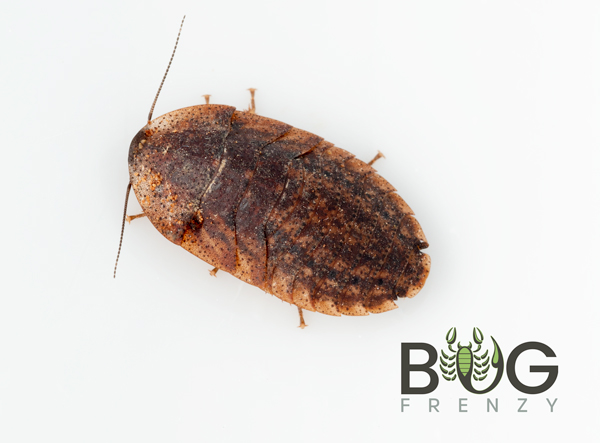
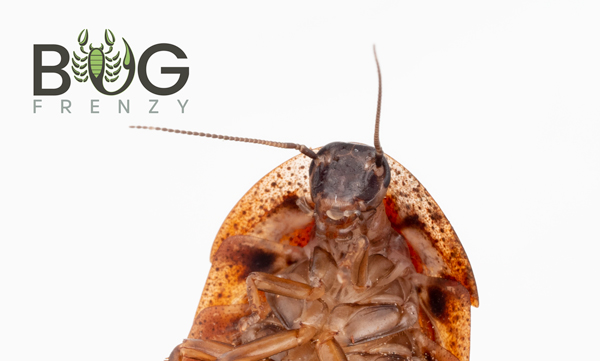
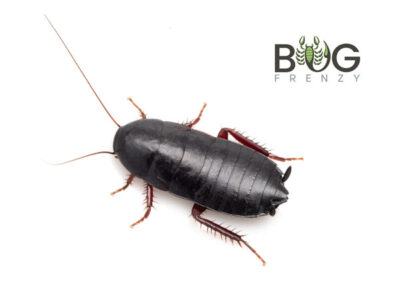
These are adorable native cockroaches found under eucalyptus bark throughout Australia, however they are uncommon in semi-arid and arid parts.
In the wild they feed on detritus and bark, but in captivity they will feed on cockroach food and a piece of fruit or vegetable like carrot, apple, grape or pumpkin for moisture and sugar.
They are very hardy, clean, slow moving, easy to handle, adorable and they do not bite. They make excellent classroom pets to learn about the wrongfully maligned cockroach order. Only 4 species are capable of infesting houses in Australian and NONE are actually native. There’s the German cockroach (native to Europe, funnily enough in Germany it is called the Russian Cockroach), The American cockroach (actually native to Northern Africa) the ‘Australian’ cockroach (Very similar to the American cockroach, actually native to Asia) and the Brown-Banded cockroach (native to Asia).
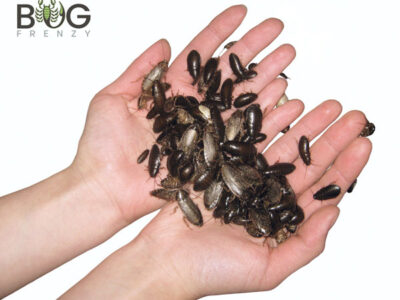
They are great for kids to handle and suitable for all ages, they can simply be picked up gently by the side of the body and put on a hand (and even hand fed sugary fruit like apple, grape or melon).
Cockroaches, like some true bugs and all praying mantids, lay eggs incased in a hard, foamy Oothecae. Some bury it in the ground, glue it to plant matter, or just leave it on the ground. This species however is what is called “false viviparous”, in that it keep the oothecae inside of itself and it hatches there, essentially giving live brith (however it is not the same hence the “false”). The babies are around 5mm long when born and will mature in about 4 months. they live from 12-18months. Only the females and juveniles look like prehistoric trilobites, males are fully winged but cannot fly, however if thrown gently into the air, they can glide back down.
Adult females up to 35mm in length
Adult males 30mm including wings
Reviews
There are no reviews yet